Puzzles · 6 min read
How to Solve Sudoku Without Guessing
Guessing feels like progress, and it is the slowest way to solve a Sudoku. A wrong guess does not announce itself; it sits quietly until, twenty digits later, a row needs two fives. Then you are hunting for a mistake instead of solving a puzzle.
The puzzles on Alex Play Zone are built so that guessing is never needed. These four techniques, used in this order, are enough for every easy and medium grid and most hard ones.
Technique 1: scan one digit at a time
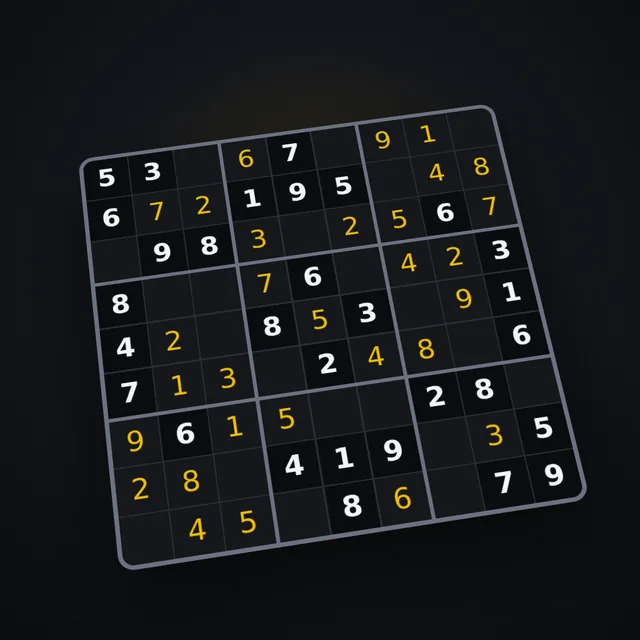
Choose a digit — start with the one that appears most often on the grid. Look at each 3 × 3 box that does not yet contain it. The rows and columns that already hold that digit elsewhere rule out part of the box. If only one cell is left, you have a placement.
Go through all nine digits this way before trying anything cleverer. On an easy puzzle, scanning alone finishes the grid.
Technique 2: the last digit in a cell
Now look from the cell’s point of view. A cell “sees” twenty others: the rest of its row, its column and its box. If eight different digits already appear among them, the cell can only be the ninth. Cells in crowded rows and boxes are the place to look.
Technique 3: write notes, then find pairs
When the first two techniques dry up, switch on Notes and write the possible digits into the cells of the fullest box, row or column — not the whole grid, which only buries the useful information.
Then look for a pair: two cells in the same row, column or box whose notes are the same two digits and nothing else. Those two digits must go in those two cells, in one order or the other, so they can be removed from every other cell in that row, column or box. Often that leaves a neighbour with a single candidate.
Technique 4: box and line
Sometimes all the places a digit could go inside a box lie in one row. You do not know which cell it is yet — but you do know the digit for that row is inside that box. So it cannot appear anywhere else in the row, and you can remove it from the row’s other cells. The same reasoning works with columns.
This step places nothing by itself, which is why it is easy to miss. It clears candidates, and the cleared candidates give you the next single.
A routine that works
- Scan all nine digits.
- Check crowded cells for a last possible digit.
- Each time you place a digit, re-scan that digit and its box at once — one placement usually unlocks another.
- Only when nothing moves, add notes to the tightest area and look for pairs and box-line steps.
- Keep notes up to date: when a digit is placed, remove it from the notes in its row, column and box.
The same thinking in Duet and Star Zones
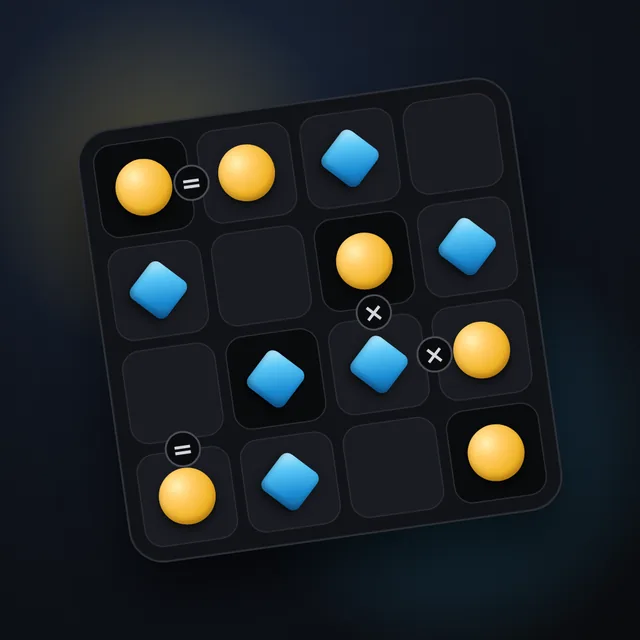
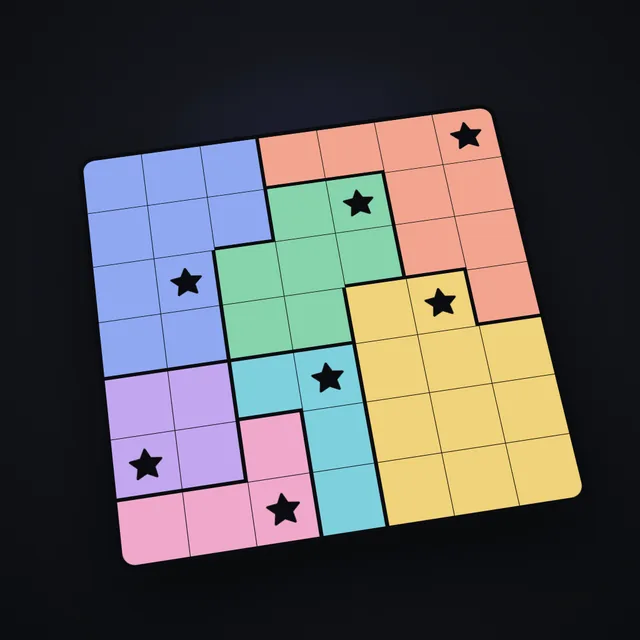
These habits carry over to our other puzzles. In Duet, counting three of a symbol in a row fills the rest of the row, just as a full set of a digit does here. In Star Zones, crossing out every cell a star rules out is the same idea as removing a candidate. In all three, the question is never “what might go here?” but “what can no longer go here?”
In short: If you are about to guess, stop and scan again. The next sure step is always there.